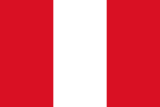
Peru – Facts, Capital & Geography | Random Country Generator
Capital
Lima
Population
33.4 Million (#45)
Currency
Peruvian Sol (PEN)
Language
Spanish
Area
1,285,216 km²
National Dish
Ceviche
National Flower
Cantuta
Density
25/km²
Internet TLD
.pe
Brief History
Peru was the heartland of the ancient Inca Empire, which constructed Cusco and Machu Picchu before Spanish conquistador Francisco Pizarro captured Emperor Atahualpa in 1532. The Viceroyalty of Peru made Lima the center of Spanish South America. Independence was declared on July 28, 1821, led by José de San Martín and Simón Bolívar, followed by periods of border conflicts and political reforms.
Key Demographics & Capital
Peru has a population of approximately 34 million, making it the fourth most populous nation in South America. The population is diverse, consisting of Mestizo (60%), Amerindian (mainly Quechua and Aymara, 25.8%), and European (5.9%) communities. Spanish is the official language, alongside Quechua and Aymara in designated regions. The population is highly urbanized, with over 78% living in cities.
Geography
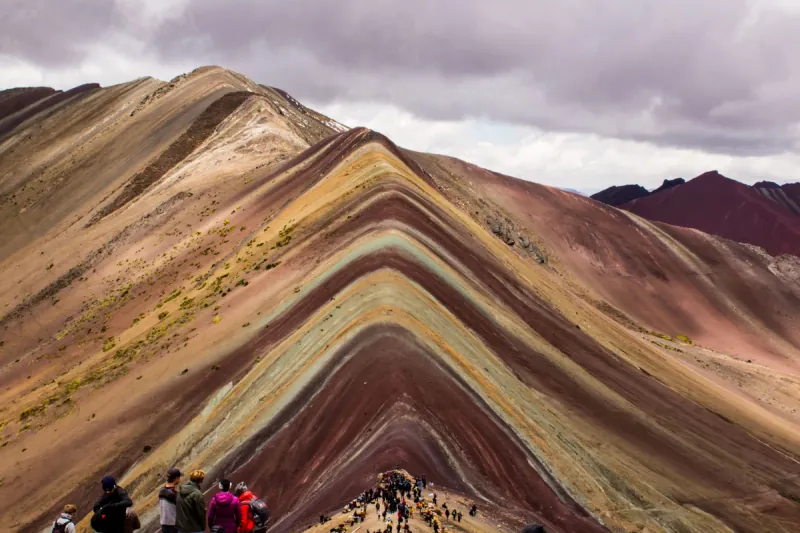
Peru features three distinct geographic regions: the arid Pacific coast (Costa), the Andes Mountains (Sierra) with peaks over 6,000 meters, and the Amazon Rainforest (Selva). Lake Titicaca straddles the border with Bolivia at 3,812 meters. The Colca Canyon is one of the deepest in the world. Peru's diverse geography creates incredibly varied ecosystems.
Culture & Tradition
Peruvian culture reflects a blend of Indigenous (Inca, Quechua, Aymara) and Spanish colonial heritage. Peruvian cuisine, led by chefs like Gastón Acurio, is considered among the best in the world. Traditional textiles, pottery, and music (huayno, marinera) preserve pre-Columbian traditions. Inti Raymi (Festival of the Sun) is a spectacular celebration of Inca heritage.
Economy
Peru's economy is driven by mining (copper, gold, silver, zinc), agriculture, fishing, and tourism. The country is the world's second-largest copper producer. Lima is a growing financial and gastronomic hub. Agriculture exports include asparagus, quinoa, and coffee. Tourism centered on Machu Picchu and Cusco is a major revenue source.
Travel Highlights
Visit the iconic Machu Picchu and the Sacred Valley of the Incas, explore Cusco's colonial architecture, float on Lake Titicaca's reed islands, fly over the mysterious Nazca Lines, and trek through the Amazon Rainforest from Puerto Maldonado. Lima is a world-class food destination. The Colca Canyon offers condor watching.
Fun Facts
Machu Picchu was voted one of the New Seven Wonders of the World.
Peru has over 3,000 varieties of potatoes.
The Nazca Lines are ancient geoglyphs visible only from the air.
Lake Titicaca is the highest navigable lake in the world.
Peru is one of the world's top producers of gold, silver, and copper.
Ceviche is Peru's national dish.
Map
Bordering & Nearby Countries
Frequently Asked Questions (FAQs)
More from South America
Want a surprise? Try our random South America country generator or pick from the entire world.
Argentina
Discover Argentina: from Buenos Aires tango to Patagonian glaciers. Explore wine country, Iguazu Falls, and vibrant culture.
Bolivia
Explore Bolivia: the Salar de Uyuni and world's highest capital. Discover Lake Titicaca, indigenous culture, and Andean adventures.
Brazil
Discover Brazil: home of the Amazon, Carnival, and beautiful beaches. Explore culture, geography, and travel highlights.
Chile
Discover Chile: from the Atacama Desert to Patagonian glaciers. Explore Easter Island, wine country, and diverse landscapes.