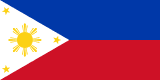
Philippines – Facts, Capital & Geography | Random Country Generator
Capital
Manila
Population
115.6 Million (#13)
Currency
Philippine Peso (PHP)
Language
Filipino, English
Area
300,000 km²
National Dish
Adobo
National Flower
Sampaguita
Density
368/km²
Internet TLD
.ph
Brief History
The Philippines was inhabited by Austronesian groups, establishing local rajahnates and sultanates before Ferdinand Magellan claimed the islands for Spain in 1521, initiating over 300 years of Spanish colonial rule. Following the Spanish-American War, it was ceded to the United States in 1898, undergoing Japanese occupation during WWII. The Philippines achieved full independence on July 4, 1946, under Manuel Roxas.
Key Demographics & Capital
The Philippines has a population of approximately 115 million, making it the eighth most populous nation in Asia. The population is primarily composed of various Austronesian ethnic groups, with Tagalog (24%) and Cebuano (20%) being the largest. Filipino (standardized Tagalog) and English are the official languages. The population is highly urbanized, with over 48% living in cities.
Geography
The Philippines is an archipelago of over 7,600 islands in Southeast Asia. The islands feature volcanic mountains, tropical rainforests, coral reefs, and stunning beaches. Luzon, Visayas, and Mindanao are the three main island groups. The country sits on the Pacific Ring of Fire with frequent earthquakes and volcanic activity. Palawan is consistently rated one of the world's most beautiful islands.
Culture & Tradition
Filipino culture blends Malay, Spanish, American, and Chinese influences. Family bonds are extremely strong. Fiestas celebrating patron saints are held throughout the year. Filipino cuisine features adobo, lechon (roast pig), sinigang, and halo-halo dessert. Music and singing are national passions. Basketball is the most popular sport.
Economy
The Philippine economy is driven by services (BPO industry is world-class), remittances from overseas workers, manufacturing, and agriculture. The country has a young, English-speaking workforce. Tourism is significant. The BPO sector has made the Philippines a global call center hub. Agriculture includes rice, coconut, and tropical fruits.
Travel Highlights
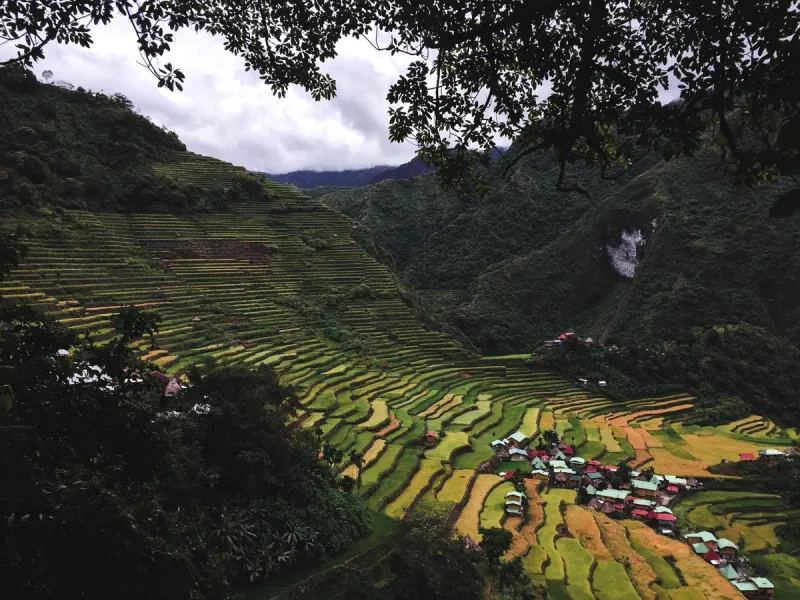
Island-hop in El Nido and Palawan's crystal lagoons, see the Chocolate Hills of Bohol and tiny tarsier primates, surf in Siargao, dive in Tubbataha Reef, explore the Banaue Rice Terraces, experience Manila's historic Intramuros, and swim with whale sharks in Oslob. The Philippines offers some of the world's best tropical island experiences.
Fun Facts
The Philippines has over 7,600 islands.
It is the world's leading producer of coconuts.
The Philippine eagle is the world's largest eagle.
Chocolate Hills in Bohol has over 1,200 perfectly cone-shaped hills.
The Philippines has the oldest Chinatown in the world (Binondo).
Filipinos are known for their warmth and hospitality.
Map
Bordering & Nearby Countries
Frequently Asked Questions (FAQs)
More from Asia
Want a surprise? Try our random Asia country generator or pick from the entire world.
Afghanistan
Discover Afghanistan: Hindu Kush mountains and ancient Silk Road heritage. Explore Bamiyan Valley, Herat's architecture, and Afghan culture.
Armenia
Explore Armenia: first Christian nation. Discover ancient monasteries, Lake Sevan, and Caucasus mountain heritage.
Azerbaijan
Explore Azerbaijan: Land of Fire. Discover Baku's Flame Towers, ancient walled city, mud volcanoes, and Caspian Sea heritage.

Bahrain
Explore Bahrain: ancient Dilmun heritage and modern Gulf culture. Discover pearl diving history, Formula One, and island archipelago charm.