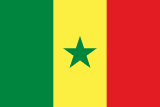
Senegal – Facts, Capital & Geography | Random Country Generator
Capital
Dakar
Population
17.2 Million (#69)
Currency
West African CFA Franc (XOF)
Language
French
Area
196,722 km²
National Dish
Thiéboudienne
National Flower
Baobab Blossom
Density
87/km²
Internet TLD
.sn
Brief History
Senegal was part of the medieval Jolof Empire, which controlled trade routes along the Senegal River, later colonized by France in the 17th century with Saint-Louis serving as a major colonial hub. It achieved independence on April 4, 1960, under Léopold Sédar Senghor, a renowned poet who established a stable democratic tradition. Senegal entered a brief confederation with Gambia (Senegambia) in the 1980s.
Key Demographics & Capital
Senegal has a population of approximately 17.3 million, comprising several ethnic groups, with the Wolof (38%), Pulaar (26%), and Serer (15%) being the largest. French is the official language, while Wolof is the national lingua franca spoken by over 80% of the population. The population is very young (median age of 18) and highly urbanized, concentrated in the Dakar metropolitan area.
Geography
Senegal is on the westernmost point of Africa, with an Atlantic coastline. The landscape features sandy beaches, savannas, and the Sahel in the north. The Casamance region in the south has lush tropical forests. The Gambia River country is almost entirely enclosed within Senegal. The Senegal River forms the northern border.
Culture & Tradition
Senegalese culture is vibrant and influential across West Africa. Teranga (hospitality) is a core value. Mbalax music, popularized by Youssou N'Dour, is the national sound. Wrestling (la lutte) is a beloved traditional sport. Senegalese cuisine features thieboudienne (fish and rice), the national dish. Sufi Islam with its colorful brotherhoods shapes spiritual life.
Economy
Senegal has one of West Africa's most stable economies. Key sectors include fishing, agriculture (groundnuts, phosphates), tourism, and services. Dakar is a major business hub. Offshore oil and gas discoveries promise future revenue. The country has a growing tech and startup scene.
Travel Highlights
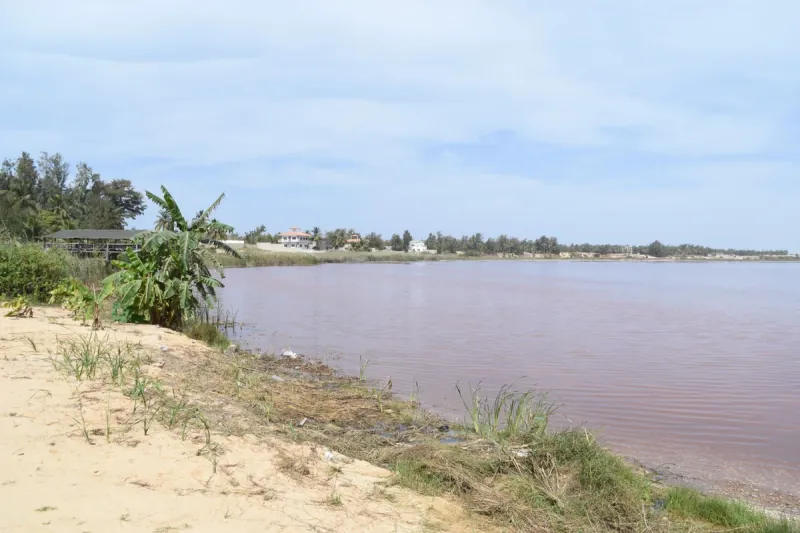
Visit Gorée Island to learn about the slave trade, explore the Pink Lake (Lac Rose), discover the vibrant culture of Saint-Louis (UNESCO), go birdwatching in Djoudj National Bird Sanctuary, and experience Dakar's art and music scene. The Casamance region offers beautiful beaches and traditional villages.
Fun Facts
Dakar is the westernmost city on the African mainland.
The Dakar Rally was originally a race from Paris to Dakar.
Senegal has never had a coup d'état.
The Pink Lake (Lac Rose) is naturally pink due to algae.
Youssou N'Dour is one of Africa's most famous musicians.
Senegal is known as the 'Gateway to Africa.'
Map
Bordering & Nearby Countries
Frequently Asked Questions (FAQs)
More from Africa
Want a surprise? Try our random Africa country generator or pick from the entire world.
Algeria
Discover Algeria: Africa's largest country. From Saharan landscapes to Mediterranean coasts, explore ancient ruins and Berber culture.
Angola
Explore Angola: from Kalandula Falls to Atlantic beaches. Discover vibrant culture, wildlife, and Southern African landscapes.
Benin
Discover Benin: birthplace of Voodoo. Explore Dahomey palaces, floating villages, and rich West African traditions.
Botswana
Explore Botswana: home of the Okavango Delta and incredible safaris. Discover elephants, Kalahari landscapes, and African wilderness.