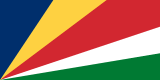
Seychelles – Facts, Capital & Geography | Random Country Generator
Capital
Victoria
Population
100K (#181)
Currency
Seychellois Rupee (SCR)
Language
Seychellois Creole, English, French
Area
459 km²
National Dish
Grilled Fish with Curry
National Flower
Tropicbird Orchid
Density
209/km²
Internet TLD
.sc
Brief History
Seychelles was uninhabited when French mariners arrived in 1756, naming the islands after Jean Moreau de Séchelles. France imported enslaved Africans to establish spice plantations, before ceding the islands to Great Britain in 1814. Seychelles achieved independence from the UK on June 29, 1976, under James Mancham, transitioning to a single-party socialist state under France-Albert René after a 1977 coup.
Key Demographics & Capital
Seychelles has a population of approximately 100,000, making it the least populous sovereign nation in Africa. The population is primarily Seychellois Creole (mixed French and African descent, about 90%). Seychellois Creole, English, and French are the three official languages. The population density is high, with the vast majority of residents concentrated on Mahé Island, primarily in Victoria.
Geography
Seychelles is an archipelago of 115 islands in the Indian Ocean northeast of Madagascar. The inner islands are granitic with lush vegetation and dramatic boulder-strewn beaches. The outer islands are coral atolls. Mahé is the largest island. The Aldabra Atoll is a UNESCO World Heritage Site and the world's second-largest coral atoll.
Culture & Tradition
Seychellois culture is a Creole blend of African, Asian, and European influences. Creole language, cuisine, and music define the cultural identity. Moutya dance has African roots. The cuisine features fresh seafood, tropical fruits, and spices. The islands have a relaxed, tropical lifestyle. Art and craftsmanship include boat-building traditions.
Economy
Seychelles has the highest GDP per capita in Africa. Tourism and fishing (tuna processing) are the main economic pillars. The country has developed a strong service economy. Conservation and the blue economy are priorities. Seychelles has established large marine protected areas.
Travel Highlights
Relax on Anse Source d'Argent (often called the world's most beautiful beach), snorkel in turquoise waters, visit the Vallée de Mai (UNESCO) to see Coco de Mer palms, explore Aldabra Atoll's pristine marine life, and discover the colorful Victoria market. Island-hopping between Mahé, Praslin, and La Digue is unforgettable.
Fun Facts
Seychelles has the smallest population of any African sovereign state.
The Coco de Mer palm produces the world's largest seed.
Aldabra Atoll is the world's second-largest coral atoll.
Seychelles has the highest GDP per capita in Africa.
The granite boulders on beaches are millions of years old.
Seychelles was uninhabited until the 18th century.
Map
Bordering & Nearby Countries
Frequently Asked Questions (FAQs)
More from Africa
Want a surprise? Try our random Africa country generator or pick from the entire world.
Algeria
Discover Algeria: Africa's largest country. From Saharan landscapes to Mediterranean coasts, explore ancient ruins and Berber culture.
Angola
Explore Angola: from Kalandula Falls to Atlantic beaches. Discover vibrant culture, wildlife, and Southern African landscapes.
Benin
Discover Benin: birthplace of Voodoo. Explore Dahomey palaces, floating villages, and rich West African traditions.
Botswana
Explore Botswana: home of the Okavango Delta and incredible safaris. Discover elephants, Kalahari landscapes, and African wilderness.