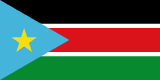
South Sudan – Facts, Capital & Geography | Random Country Generator
Capital
Juba
Population
11.4 Million (#82)
Currency
South Sudanese Pound (SSP)
Language
English
Area
619,745 km²
National Dish
Ful Medames
National Flower
None official
Density
18/km²
Internet TLD
.ss

Brief History
South Sudan was dominated by Nilotic-speaking groups who resisted northern slave raids, later incorporated into Anglo-Egyptian Sudan. Following Sudan's independence in 1956, the region fought two successive civil wars against the northern government over religious and political autonomy. Following a peace agreement and an overwhelming referendum, South Sudan achieved independence on July 9, 2011, as the world's newest nation.
Key Demographics & Capital
South Sudan has a population of approximately 11 million, comprising over 60 distinct ethnic groups, with the Dinka (35.8%) and Nuer (15.6%) being the largest. English is the official national language, while Juba Arabic is the primary spoken lingua franca. The population is overwhelmingly young (median age of 18) and predominantly rural (80%), concentrated along the White Nile river banks.
Geography
South Sudan is a landlocked country in East-Central Africa. The landscape is dominated by the vast Sudd wetland — one of the world's largest swamp areas — fed by the White Nile. Savanna and tropical forests cover much of the country. The Imatong Mountains in the southeast contain the highest peak.
Culture & Tradition
South Sudan has remarkable cultural diversity with over 60 ethnic groups. The Dinka and Nuer are the largest groups. Cattle culture is central to many communities, with cattle serving as currency, status symbols, and cultural anchors. Traditional music, dance, and scarification are important cultural expressions.
Economy
South Sudan's economy is heavily dependent on oil production, which accounts for the vast majority of government revenue. Subsistence agriculture and livestock herding employ most of the population. The country has significant agricultural potential. Ongoing conflict has severely impacted economic development.
Travel Highlights
South Sudan offers wildlife potential with large mammal migrations in Boma National Park, the vast Sudd wetland for birdwatching, and cultural experiences with the Dinka and other peoples. Nimule National Park near the Uganda border is more accessible. Travel requires significant planning due to security concerns.
Fun Facts
South Sudan is the world's newest country (2011).
The Sudd is one of the world's largest wetlands.
South Sudan has remarkable wildlife migration potential.
The White Nile flows through the country.
Over 60 indigenous languages are spoken.
South Sudan has significant untapped oil reserves.
Map
Bordering & Nearby Countries
Frequently Asked Questions (FAQs)
More from Africa
Want a surprise? Try our random Africa country generator or pick from the entire world.
Algeria
Discover Algeria: Africa's largest country. From Saharan landscapes to Mediterranean coasts, explore ancient ruins and Berber culture.
Angola
Explore Angola: from Kalandula Falls to Atlantic beaches. Discover vibrant culture, wildlife, and Southern African landscapes.
Benin
Discover Benin: birthplace of Voodoo. Explore Dahomey palaces, floating villages, and rich West African traditions.
Botswana
Explore Botswana: home of the Okavango Delta and incredible safaris. Discover elephants, Kalahari landscapes, and African wilderness.