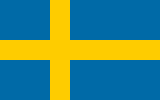
Sweden – Facts, Capital & Geography | Random Country Generator
Capital
Stockholm
Population
10.5 Million (#87)
Currency
Swedish Krona (SEK)
Language
Swedish
Area
450,295 km²
National Dish
Meatballs (Köttbullar)
National Flower
Linnaea Borealis
Density
25/km²
Internet TLD
.se
Brief History
Sweden emerged as a unified kingdom in the Middle Ages, dominating Northern Europe during the 17th century as a major military power under Gustavus Adolphus. It lost Baltic territories to Russia in the Great Northern War. Sweden entered a personal union with Norway from 1814 to 1905, maintaining a policy of official neutrality and non-alignment since the Napoleonic Wars, while building a comprehensive welfare state.
Key Demographics & Capital
Sweden has a population of approximately 10.5 million, with Swedish serving as the official national language. The population has seen increasing immigrant diversity in recent decades (about 20% foreign-born, primarily Syrian and Iraqi). Around 88% of the population lives in urban areas, concentrated around Stockholm, Gothenburg, and Malmö. The country ranks consistently high in human development.
Geography
Sweden occupies the eastern part of the Scandinavian Peninsula, stretching from the sub-Arctic north to the temperate south. About 65% of the country is covered by forests. Sweden has nearly 100,000 lakes, including Europe's third-largest, Lake Vänern. The coastline includes thousands of islands in the Stockholm Archipelago. Northern Sweden lies above the Arctic Circle.
Culture & Tradition
Swedish culture emphasizes equality, sustainability, and design. Swedish design (IKEA, H&M) is globally influential. The concept of 'lagom' (just the right amount) permeates Swedish life. Fika (coffee break) is a sacred social ritual. Sweden has contributed enormously to music (ABBA, Swedish pop). Midsummer celebrations are the most cherished holiday.
Economy
Sweden has a highly developed export-oriented economy. Key industries include automotive (Volvo), telecommunications (Ericsson), technology (Spotify), pharmaceuticals, and forestry. Sweden is a leader in innovation and has one of the highest rates of patent applications per capita. The country is also a pioneer in sustainability and renewable energy.
Travel Highlights
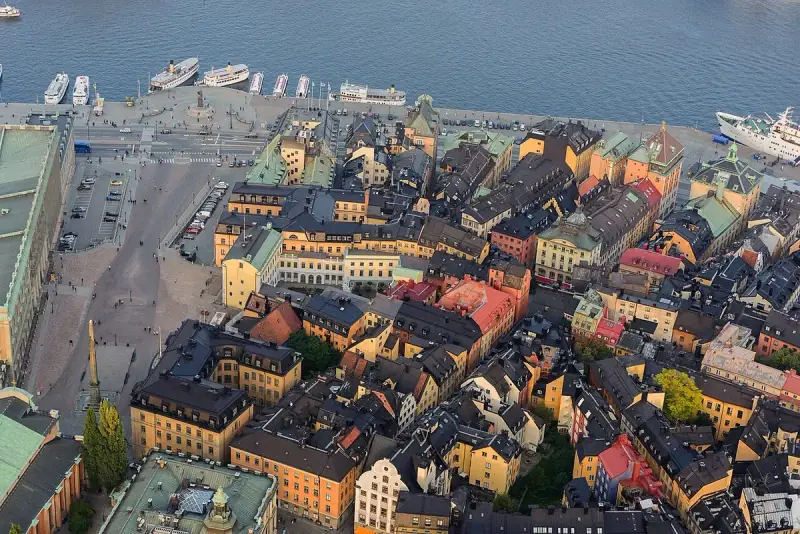
Explore Stockholm's old town (Gamla Stan) and Vasa Museum, experience the Ice Hotel in Jokkmokk, see the northern lights in Swedish Lapland, visit the fairy-tale city of Gothenburg, and island-hop in the Stockholm Archipelago. The Midnight Sun in summer and the Swedish countryside's beauty are unforgettable. Malmö offers modern Scandinavian urban culture.
Fun Facts
Sweden has over 200,000 islands.
IKEA, Spotify, and Volvo are Swedish brands.
Sweden introduced the concept of the ombudsman.
The Nobel Prizes were established by Swedish inventor Alfred Nobel.
Fika (coffee break with pastries) is a cherished Swedish tradition.
Sweden was the first country to ban spanking children.
Map
Bordering & Nearby Countries
Frequently Asked Questions (FAQs)
More from Europe
Want a surprise? Try our random Europe country generator or pick from the entire world.
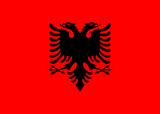
Albania
Explore Albania: Europe's last hidden gem. Discover pristine beaches, ancient cities, and dramatic Albanian Alps.
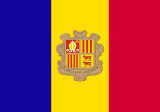
Andorra
Explore Andorra: tiny mountain principality in the Pyrenees. Discover skiing, duty-free shopping, and Romanesque heritage.
Austria
Explore Austria: land of Mozart, Alpine peaks, and Viennese culture. Discover Salzburg, ski resorts, and Habsburg heritage.
Belarus
Explore Belarus: Europe's last primeval forest and medieval castles. Discover Belovezhskaya Pushcha, Mir Castle, and Slavic heritage.