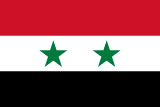
Syria – Facts, Capital & Geography | Random Country Generator
Capital
Damascus
Population
22.1 Million (#60)
Currency
Syrian Pound (SYP)
Language
Arabic
Area
185,180 km²
National Dish
Kibbeh
National Flower
Jasmine
Density
98/km²
Internet TLD
.sy
Brief History
Syria corresponds to the heart of the ancient Fertile Crescent, ruled by the Akkadian, Hittite, Assyrian, Roman, and Byzantine empires. Damascus became the capital of the Umayyad Caliphate in 661 CE, serving as a global center of Islamic power before Ottoman conquest. Administered under a French mandate after WWI, Syria achieved independence in 1946, later falling under Ba'athist rule and a civil war since 2011.
Key Demographics & Capital
Syria has a population of approximately 22 million, with ethnic Arabs comprising over 74% of the total population, followed by Kurds (9%), Turkmen, and Assyrian minorities. Arabic is the sole official language. The population has been profoundly affected by the civil war since 2011, resulting in over 5 million refugees fleeing to neighboring countries and Europe, and millions displaced internally.
Geography
Syria is in the heart of the Middle East with Mediterranean coast in the west. The landscape includes the coastal mountains, the fertile Orontes River valley, the arid Syrian Desert, and the Euphrates River valley in the east. The Anti-Lebanon Mountains form the border with Lebanon.
Culture & Tradition
Syrian culture has roots going back thousands of years. Damascus and Aleppo are among the world's oldest cities. Syrian cuisine — kibbeh, fattoush, shawarma, baklawa — has influenced food across the region. Traditional crafts include damascene metalwork, glass blowing, and textile weaving. Arabic music and poetry are deeply valued.
Economy
Syria's economy has been devastated by conflict since 2011. Before the war, agriculture (cotton, wheat, olives), oil, and tourism were key sectors. Damascus and Aleppo were major commercial centers. Reconstruction challenges are immense. The country has significant cultural tourism potential when stability returns.
Travel Highlights
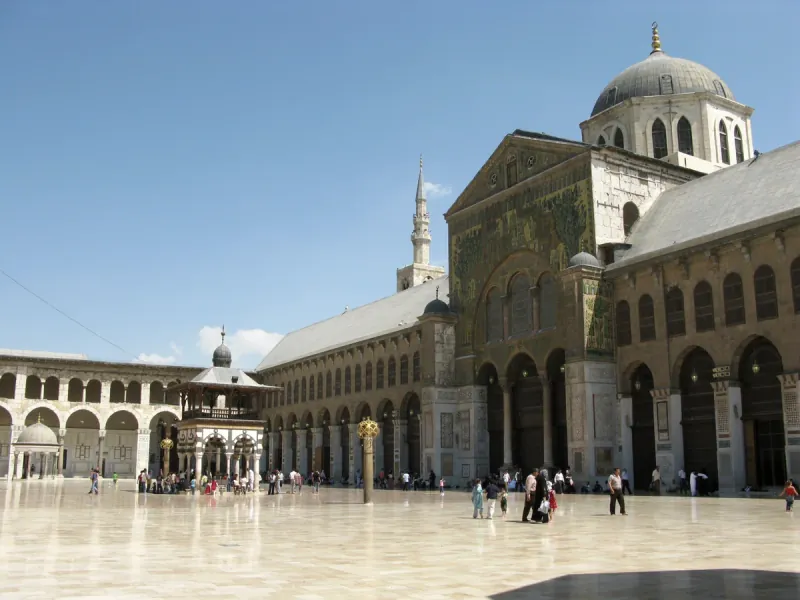
Damascus's Old City (UNESCO) features the Umayyad Mosque and ancient souks. Aleppo's Citadel and historic center (reconstruction ongoing) represent extraordinary heritage. Palmyra's Roman ruins, the Crusader castle Krak des Chevaliers, and the ancient city of Bosra are remarkable sites. Travel is severely limited by the ongoing situation.
Fun Facts
Damascus is one of the oldest continuously inhabited cities in the world.
Syria was home to some of the earliest human civilizations.
The Umayyad Mosque in Damascus is one of the oldest mosques in the world.
Aleppo's souk was the longest covered market in the world.
Syria has six UNESCO World Heritage Sites.
Syrian cuisine has influenced food cultures across the Middle East.
Map
Bordering & Nearby Countries
Frequently Asked Questions (FAQs)
More from Asia
Want a surprise? Try our random Asia country generator or pick from the entire world.
Afghanistan
Discover Afghanistan: Hindu Kush mountains and ancient Silk Road heritage. Explore Bamiyan Valley, Herat's architecture, and Afghan culture.
Armenia
Explore Armenia: first Christian nation. Discover ancient monasteries, Lake Sevan, and Caucasus mountain heritage.

Azerbaijan
Explore Azerbaijan: Land of Fire. Discover Baku's Flame Towers, ancient walled city, mud volcanoes, and Caspian Sea heritage.

Bahrain
Explore Bahrain: ancient Dilmun heritage and modern Gulf culture. Discover pearl diving history, Formula One, and island archipelago charm.