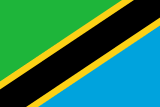
Tanzania – Facts, Capital & Geography | Random Country Generator
Capital
Dodoma
Population
63.0 Million (#23)
Currency
Tanzanian Shilling (TZS)
Language
Swahili, English
Area
945,087 km²
National Dish
Ugali na Nyama
National Flower
None official
Density
70/km²
Internet TLD
.tz
Brief History
Tanzania was formed in 1964 through the merger of Tanganyika, which gained independence from Great Britain in 1961, and the island archipelago of Zanzibar, which overthrew its ruling sultan in a 1964 revolution. Julius Nyerere, the country's first president, introduced Ujamaa, a system of African socialist collective farming. The coastal regions, including Kilwa, served for centuries as major hubs for Swahili-Arab Indian Ocean trade routes. Tanzania transitioned to a multi-party democratic system in 1992, maintaining relative regional stability.
Key Demographics & Capital
Tanzania has a population of approximately 63 million, presenting a diverse demographic profile comprising more than 120 indigenous Bantu-speaking ethnic groups. Swahili and English are the official languages, with Swahili serving as the national language of social cohesion, while regional languages are spoken in rural households. The population is concentrated in fertile northern highlands, coastal areas, and Zanzibar, while the central plateau remains sparsely populated. The country has a very young population, with a median age of around 18 years.
Geography
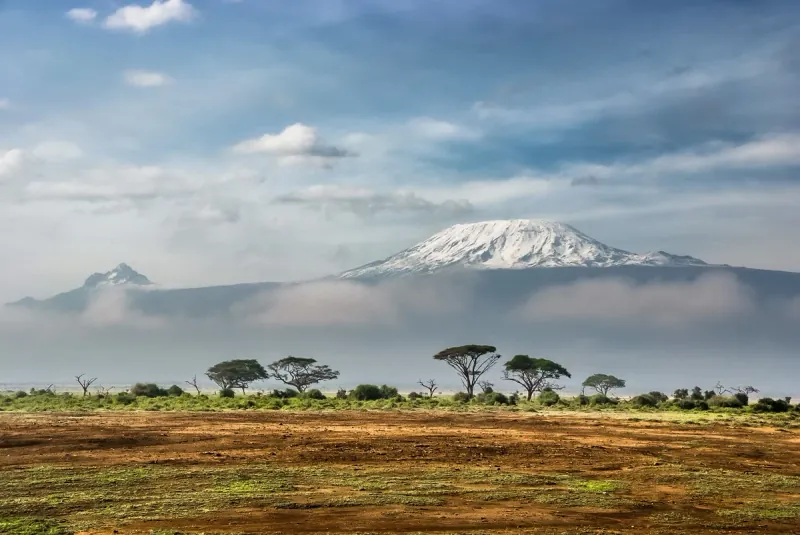
Tanzania is in East Africa, bordered by the Indian Ocean. The landscape includes Mount Kilimanjaro, the Serengeti plains, the Ngorongoro Crater, Lake Victoria (Africa's largest lake), and the spice island of Zanzibar. The Great Rift Valley runs through the country. Tanzania has incredible biodiversity and some of Africa's most iconic landscapes.
Culture & Tradition
Tanzania is home to over 120 ethnic groups, with Swahili serving as the unifying language. The Maasai people are among the most recognized. Tanzanian culture blends Bantu, Arab, and Indian influences, especially on Zanzibar. Taarab music, Tingatinga art, and traditional dance are cultural highlights. The country is known for its peaceful coexistence of diverse communities.
Economy
Tanzania's economy is growing steadily, driven by mining (gold, tanzanite — found only here), agriculture (coffee, tea, cashews, sisal), tourism (safari industry), and construction. The Serengeti and Kilimanjaro attract millions of visitors. Zanzibar's tourism and spice trade also contribute. Natural gas reserves offer future economic potential.
Travel Highlights
Climb Mount Kilimanjaro, witness the Great Migration in the Serengeti, descend into the Ngorongoro Crater, relax on Zanzibar's white-sand beaches, and explore the Spice Island's Stone Town. Lake Manyara, Tarangire National Park, and the remote Selous Game Reserve offer incredible wildlife experiences. Diving and snorkeling around Zanzibar are world-class.
Fun Facts
Mount Kilimanjaro is Africa's highest peak at 5,895 meters.
The Serengeti Great Migration involves over 1.5 million wildebeest.
Zanzibar was once the world's largest clove producer.
Tanzania has more land dedicated to national parks than any other country.
Freddie Mercury was born in Zanzibar.
Tanzania is home to the Ngorongoro Crater, the world's largest inactive volcanic caldera.
Map
Bordering & Nearby Countries
Frequently Asked Questions (FAQs)
More from Africa
Want a surprise? Try our random Africa country generator or pick from the entire world.
Algeria
Discover Algeria: Africa's largest country. From Saharan landscapes to Mediterranean coasts, explore ancient ruins and Berber culture.
Angola
Explore Angola: from Kalandula Falls to Atlantic beaches. Discover vibrant culture, wildlife, and Southern African landscapes.
Benin
Discover Benin: birthplace of Voodoo. Explore Dahomey palaces, floating villages, and rich West African traditions.
Botswana
Explore Botswana: home of the Okavango Delta and incredible safaris. Discover elephants, Kalahari landscapes, and African wilderness.