
Timor-Leste – Facts, Capital & Geography | Random Country Generator
Capital
Dili
Population
1.3 Million (#152)
Currency
United States Dollar (USD)
Language
Tetum, Portuguese
Area
14,874 km²
National Dish
Ikan Pepes
National Flower
None official
Density
92/km²
Internet TLD
.tl
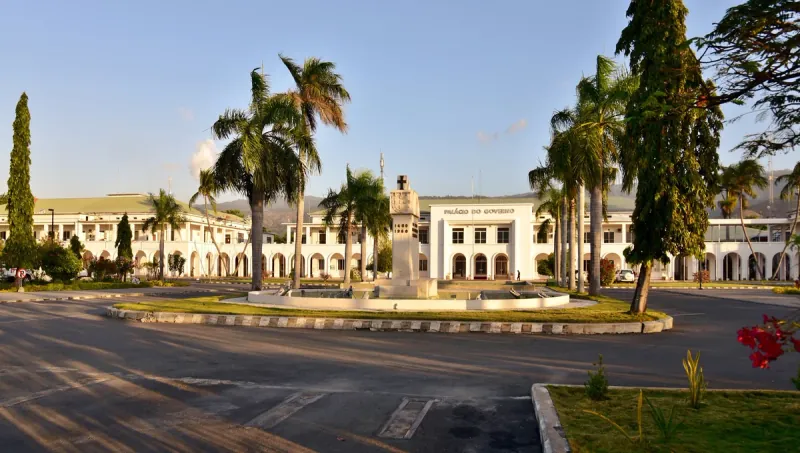
Brief History
Timor-Leste was colonized by Portugal in the 16th century, remaining under Portuguese control for over four centuries as Portuguese Timor. It declared independence in 1975 but was immediately invaded and annexed by Indonesia, which led to a brutal 24-year occupation. Following a UN-sponsored referendum in 1999, the nation achieved formal independence on May 20, 2002, making it the first new sovereign state of the 21st century. The country has since worked to rebuild its infrastructure and develop its offshore oil reserves.
Key Demographics & Capital
Timor-Leste has a population of approximately 1.3 million, consisting of distinct Malayo-Polynesian and Papuan ethnic groups. Tetum and Portuguese are the official languages, while Indonesian and English are recognized as working languages under the constitution. The population is predominantly rural, concentrated in the fertile northern coastal regions and mountainous interior valleys, with the capital, Dili, being the largest urban hub. The country features a high fertility rate and a young demographic profile.
Geography
Timor-Leste occupies the eastern half of the island of Timor in Southeast Asia, plus the exclave of Oecusse. The terrain is mountainous with a central spine reaching over 2,900 meters. The north coast drops steeply to the sea, while the south has broader coastal plains. Coral reefs surround the coastline.
Culture & Tradition
Timorese culture blends Austronesian, Portuguese, and Catholic influences. Traditional animist beliefs coexist with Catholicism. Tais cloth weaving is an important cultural practice. The struggle for independence from Indonesia is a defining national narrative. Traditional sacred houses (uma lulik) are spiritual centers. Coffee culture reflects Portuguese heritage.
Economy
Timor-Leste's economy depends heavily on oil and gas revenues from the Timor Sea. Coffee is the main non-oil export. Agriculture is primarily subsistence. The country faces development challenges as one of Asia's poorest nations. Tourism has potential but infrastructure is limited. The Petroleum Fund manages oil revenues for future generations.
Travel Highlights
Visit the Cristo Rei statue in Dili, dive and snorkel in Ataúro Island's pristine reefs, explore the Nino Konis Santana National Park, discover traditional villages with sacred houses, visit the resistance museum, and experience coffee plantations in the highlands. Timor-Leste offers authentic, off-the-beaten-path experiences.
Fun Facts
Timor-Leste is Asia's youngest country (independent in 2002).
The country uses the US dollar as currency.
Ataúro Island has some of the world's highest coral reef biodiversity.
Portuguese is one of the official languages.
The Cristo Rei statue in Dili is taller than the one in Rio de Janeiro.
Traditional tais cloth weaving is an important cultural practice.
Map
Bordering & Nearby Countries
Frequently Asked Questions (FAQs)
More from Asia
Want a surprise? Try our random Asia country generator or pick from the entire world.
Afghanistan
Discover Afghanistan: Hindu Kush mountains and ancient Silk Road heritage. Explore Bamiyan Valley, Herat's architecture, and Afghan culture.
Armenia
Explore Armenia: first Christian nation. Discover ancient monasteries, Lake Sevan, and Caucasus mountain heritage.
Azerbaijan
Explore Azerbaijan: Land of Fire. Discover Baku's Flame Towers, ancient walled city, mud volcanoes, and Caspian Sea heritage.

Bahrain
Explore Bahrain: ancient Dilmun heritage and modern Gulf culture. Discover pearl diving history, Formula One, and island archipelago charm.