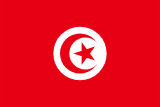
Tunisia – Facts, Capital & Geography | Random Country Generator
Capital
Tunis
Population
12.0 Million (#79)
Currency
Tunisian Dinar (TND)
Language
Arabic
Area
163,610 km²
National Dish
Couscous
National Flower
Jasmine
Density
76/km²
Internet TLD
.tn
Brief History
Tunisia was the heart of the ancient Phoenician Empire of Carthage, which was destroyed by Rome in 146 BCE during the Punic Wars. It adopted Islam in the 7th century and later became an Ottoman province before being occupied by France as a protectorate in 1881. Tunisia achieved independence on March 20, 1956, under Habib Bourguiba, who established a secular state. The country sparked the regional Arab Spring in 2010 when popular protests ousted long-time dictator Zine El Abidine Ben Ali.
Key Demographics & Capital
Tunisia has a population of approximately 12 million, presenting a highly homogeneous demographic profile with ethnic Arabs comprising over 98% of the populace. Arabic is the official language, while Tunisian Arabic (Tounsi) is spoken in daily life, and French is widely used in education, government, and commerce. The population is concentrated in the northern and eastern coastal plains, particularly in Tunis and Sfax, while the southern desert is sparsely populated. Tunisia has experienced moderate emigration to Europe, especially France and Italy.
Geography
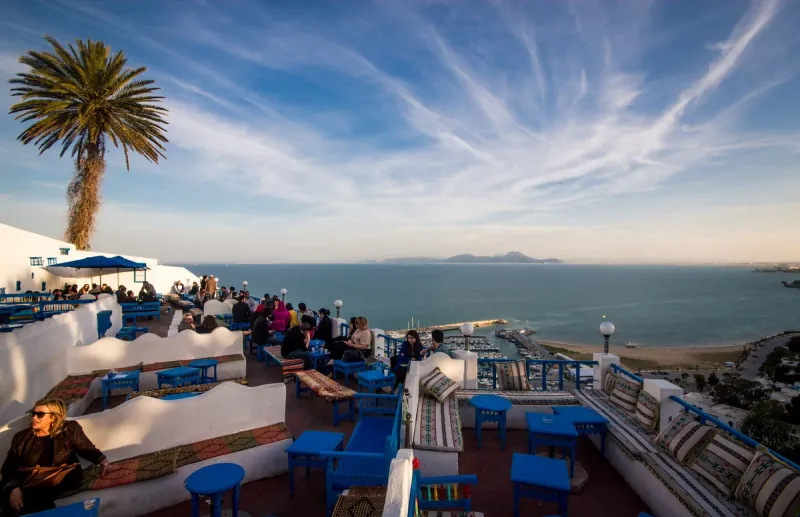
Tunisia is the northernmost country in Africa, with a Mediterranean coastline and Saharan desert in the south. The Atlas Mountains cross the north. The terrain varies from fertile northern valleys to salt lakes (chotts) and sand dunes in the south. The climate ranges from Mediterranean to arid.
Culture & Tradition
Tunisian culture blends Berber, Arab, Ottoman, and French influences. The country has a strong tradition of Islamic art and architecture. Tunisian cuisine features dishes like couscous, brik, and harissa. The medinas (old cities) of Tunis, Sousse, and Kairouan are cultural treasure troves. Tunisia has a thriving contemporary arts scene.
Economy
Tunisia has a diversified economy including manufacturing (textiles, automotive parts), tourism, agriculture (olive oil, dates), phosphate mining, and services. The country is a major olive oil producer. IT services and call centers are growing sectors. Tourism along the Mediterranean coast is significant.
Travel Highlights
Explore the ruins of ancient Carthage, visit the stunning Bardo Museum's Roman mosaics, wander the medina of Tunis (UNESCO), see the El Jem amphitheatre, visit the Star Wars filming locations in Matmata and Tozeur, and relax on Djerba Island. The Saharan oases and Ksour villages are magical.
Fun Facts
Tunisia has the best-preserved Roman mosaics in the world.
Star Wars was filmed in southern Tunisia.
Carthage was once Rome's greatest rival.
Tunisia was the birthplace of the Arab Spring.
The El Jem amphitheatre is the third-largest Roman amphitheatre.
Tunisia produces some of the world's finest olive oil.
Map
Bordering & Nearby Countries
Frequently Asked Questions (FAQs)
More from Africa
Want a surprise? Try our random Africa country generator or pick from the entire world.
Algeria
Discover Algeria: Africa's largest country. From Saharan landscapes to Mediterranean coasts, explore ancient ruins and Berber culture.
Angola
Explore Angola: from Kalandula Falls to Atlantic beaches. Discover vibrant culture, wildlife, and Southern African landscapes.
Benin
Discover Benin: birthplace of Voodoo. Explore Dahomey palaces, floating villages, and rich West African traditions.
Botswana
Explore Botswana: home of the Okavango Delta and incredible safaris. Discover elephants, Kalahari landscapes, and African wilderness.