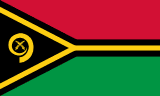
Vanuatu – Facts, Capital & Geography | Random Country Generator
Capital
Port Vila
Population
320K (#172)
Currency
Vanuatu Vatu (VUV)
Language
Bislama, English, French
Area
12,189 km²
National Dish
Lap Lap
National Flower
None official
Density
23/km²
Internet TLD
.vu
Brief History
Vanuatu was settled by Melanesian navigators before Spanish explorer Pedro Fernandes de Queirós arrived in 1606, naming the islands Espiritu Santo. It was jointly administered by Great Britain and France as the New Hebrides Condominium starting in 1906, a unique dual-colonial arrangement known locally as the "Pandemonium." Vanuatu achieved full independence on July 30, 1980, under Walter Lini, renaming the nation and establishing a parliamentary republic. The country has since focused on land rights restoration and preserving its diverse indigenous customs.
Key Demographics & Capital
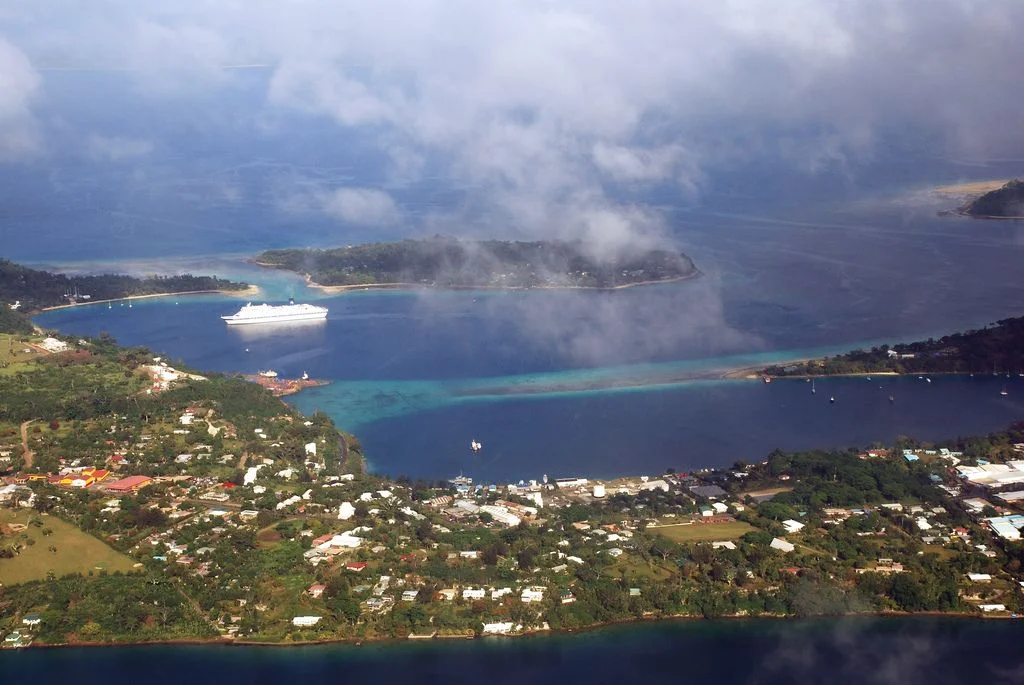
Vanuatu has a population of approximately 320,000, with ethnic Melanesians (known as Ni-Vanuatu) comprising over 98% of the residents. Bislama (an English-based creole), English, and French are the three official languages, while Vanuatu has one of the highest linguistic densities in the world with over 130 indigenous languages spoken. The population is predominantly rural, concentrated in coastal villages on the main islands of Efate, Espiritu Santo, and Tanna. The country has a high population growth rate and a young demographic profile.
Geography
Vanuatu is a Y-shaped archipelago of 83 islands in the South Pacific. The islands are volcanic with active volcanoes (Mount Yasur on Tanna has continuous eruptions). Landscapes include tropical rainforests, beaches, and rugged mountain terrain. Blue holes and underwater caves dot the coastline. The country is prone to earthquakes and cyclones.
Culture & Tradition
Vanuatu has extraordinary cultural diversity with over 100 languages for a population of 320,000. Kastom (traditional customs) remain strong. The Naghol land diving on Pentecost Island — men jumping from tall towers with vines tied to their ankles — is the origin of bungee jumping. Sand drawing is UNESCO-recognized. Traditional ceremonies and village life persist.
Economy
Vanuatu's economy relies on agriculture (copra, cocoa, kava, beef), fishing, tourism, and offshore financial services. Tourism is the largest formal sector earner. Kava exports are growing. The country has positioned itself as a citizenship-by-investment destination. Agriculture is mostly small-scale.
Travel Highlights
Watch the spectacular land diving on Pentecost Island, stand on the rim of Mount Yasur's active volcano on Tanna, snorkel the underwater post office, explore blue holes, dive the SS President Coolidge wreck, and experience traditional village life. Vanuatu offers raw South Pacific adventure with active volcanoes and living traditions.
Fun Facts
Vanuatu's land divers inspired modern bungee jumping.
The country has active volcanoes you can visit.
Vanuatu is ranked the happiest country in the world by the Happy Planet Index.
There are over 100 local languages spoken.
The cargo cult movement originated here.
Vanuatu's underwater post office accepts waterproof postcards.
Map
Bordering & Nearby Countries
Frequently Asked Questions (FAQs)
More from Oceania
Want a surprise? Try our random Oceania country generator or pick from the entire world.

Australia
Explore Australia: from the Great Barrier Reef to the Outback. Discover unique wildlife, stunning landscapes, and vibrant cities.
Fiji
Explore Fiji: 330 islands of South Pacific paradise. Discover pristine reefs, warm Fijian hospitality, and tropical island adventures.
Kiribati
Explore Kiribati: remote Pacific atolls spanning the equator. Discover WWII history, traditional culture, and pristine ocean environments.
Marshall Islands
Explore the Marshall Islands: remote Pacific atolls and nuclear history. Discover world-class diving, stick chart navigation, and island culture.