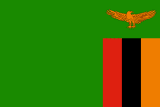
Zambia – Facts, Capital & Geography | Random Country Generator
Capital
Lusaka
Population
20.0 Million (#62)
Currency
Zambian Kwacha (ZMW)
Language
English
Area
752,612 km²
National Dish
Nshima
National Flower
Blushing Bride
Density
24/km²
Internet TLD
.zm
Brief History
Zambia was originally inhabited by Khoisan hunter-gatherers before Bantu migrations settled the region, later becoming a British protectorate under the name Northern Rhodesia in 1924. The country achieved independence on October 24, 1964, under the leadership of Kenneth Kaunda, who established a single-party socialist state. Kaunda supported liberation movements in neighboring southern African nations, leading to economic blockades. Zambia transitioned back to a multi-party democratic system in 1991, developing a stable political environment and leveraging its massive copper reserves.
Key Demographics & Capital
Zambia has a population of approximately 20 million, comprising over 70 distinct Bantu-speaking ethnic groups, with the Bemba (21%), Tonga (13.6%), and Chewa (7.4%) being the largest. English is the official language used in government and education, while seven regional languages (including Bemba, Nyanja, and Tonga) are recognized as national languages. The population density is low, with residents concentrated along the "Line of Rail" linking the Copperbelt cities to the capital, Lusaka. The population has a young demographic profile, with a median age of 17.
Geography
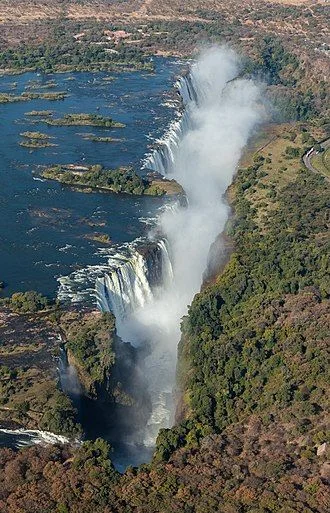
Zambia is a landlocked country in Southern Africa on a high plateau. The landscape features savanna, woodlands, and the dramatic Victoria Falls on the Zambezi River. The country has numerous rivers, wetlands, and lakes. The Luangwa and Lower Zambezi valleys are major wildlife areas. Bangweulu Wetlands in the north are vast seasonal floodplains.
Culture & Tradition
Zambian culture is diverse with over 72 ethnic groups. Traditional ceremonies like Kuomboka (of the Lozi people) are spectacular cultural events. Music includes kalindula and zamrock genres. Nshima (maize porridge) is the staple food. The country is known for its peaceful, friendly people.
Economy
Zambia's economy is heavily dependent on copper mining — it is one of the world's largest producers. Agriculture, tourism, and gemstone mining (emeralds) are also significant. The country is diversifying into manufacturing and services. Hydroelectric power from the Kariba Dam is important for energy supply.
Travel Highlights
Marvel at Victoria Falls from the Zambian side, go on walking safaris in South Luangwa National Park, canoe the Lower Zambezi River, spot the rare shoebill stork in Bangweulu Wetlands, experience the Kuomboka ceremony, and visit Kafue National Park. Zambia pioneered the walking safari concept.
Fun Facts
Victoria Falls is called 'Mosi-oa-Tunya' (The Smoke That Thunders).
Zambia shares Victoria Falls with Zimbabwe.
The country has over 72 ethnic groups.
Zambia is one of the most urbanized countries in Africa.
The Zambian emerald is world-renowned for quality.
Walking safaris were pioneered in Zambia.
Map
Bordering & Nearby Countries
Frequently Asked Questions (FAQs)
More from Africa
Want a surprise? Try our random Africa country generator or pick from the entire world.
Algeria
Discover Algeria: Africa's largest country. From Saharan landscapes to Mediterranean coasts, explore ancient ruins and Berber culture.
Angola
Explore Angola: from Kalandula Falls to Atlantic beaches. Discover vibrant culture, wildlife, and Southern African landscapes.
Benin
Discover Benin: birthplace of Voodoo. Explore Dahomey palaces, floating villages, and rich West African traditions.
Botswana
Explore Botswana: home of the Okavango Delta and incredible safaris. Discover elephants, Kalahari landscapes, and African wilderness.