Nepal – Facts, Capital & Geography | Random Country Generator
Capital
Kathmandu
Population
30.0 Million (#49)
Currency
Nepalese Rupee (NPR)
Language
Nepali
Area
147,181 km²
National Dish
Dal Bhat
National Flower
Rhododendron
Density
208/km²
Internet TLD
.np
Brief History
Nepal's modern borders were unified in 1768 by Prithvi Narayan Shah, who established the Shah dynasty. Nepal defeated British invasions, signing the Treaty of Sugauli in 1816 to secure internal sovereignty. The country was ruled by the hereditary Rana prime ministers for a century before restoring royal power in 1951. Nepal abolished its monarchy in 2008 following a decadelong Maoist insurgency, establishing a federal republic.
Key Demographics & Capital
Nepal has a population of approximately 30 million, comprising over 125 distinct ethnic groups, with the Chhetri (16.6%), Brahman-Hill (12.2%), and Magar (7%) being the largest. Nepali is the official national language, written in the Devanagari script. The population remains predominantly rural, concentrated in the fertile Terai plains and the Kathmandu Valley.
Geography
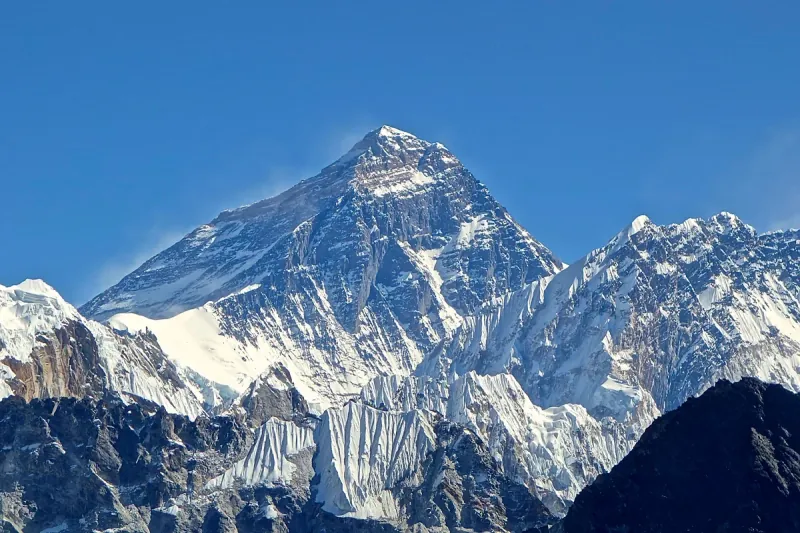
Nepal is a landlocked country nestled between China (Tibet) and India. The geography is dramatically diverse, ranging from the flat Terai plains in the south to the world's highest peaks in the north, including Mount Everest (8,849 m). The middle hills contain valleys including the Kathmandu Valley. Nepal has diverse ecosystems from subtropical forests to alpine meadows.
Culture & Tradition
Nepali culture is a unique blend of Hindu and Buddhist traditions. Kathmandu's ancient temples, stupas (Boudhanath, Swayambhunath), and medieval architecture reflect centuries of spiritual practice. Festivals like Dashain and Tihar are celebrated with great fervor. Nepali cuisine features dal bhat (lentils and rice), momos (dumplings), and Newari food. Sherpa culture is closely tied to mountaineering.
Economy
Nepal's economy is heavily dependent on agriculture, remittances from workers abroad, and tourism. Trekking and mountaineering are major tourism draws. Hydropower potential is enormous given the mountain rivers. The garment and carpet industries contribute to exports. Nepal faces challenges including infrastructure gaps and earthquake vulnerability.
Travel Highlights
Trek to Everest Base Camp or the Annapurna Circuit, explore Kathmandu's Durbar Square and Buddhist temples, visit Lumbini (Buddha's birthplace), go on jungle safari in Chitwan National Park, and paraglide over Pokhara's lakeside with Himalayan views. The medieval town of Bhaktapur and the sunrise at Nagarkot overlooking the Himalayas are magical experiences.
Fun Facts
Nepal is home to Mount Everest, the world's tallest peak.
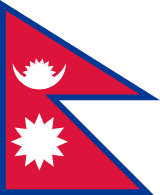
Nepal's flag is the only national flag that is not rectangular.
Nepal has never been colonized.
The birthplace of Buddha (Lumbini) is in Nepal.
Nepal has 8 of the world's 14 highest mountains.
The Gurkha soldiers are legendary fighters from Nepal.
Map
Bordering & Nearby Countries
Frequently Asked Questions (FAQs)
More from Asia
Want a surprise? Try our random Asia country generator or pick from the entire world.
Afghanistan
Discover Afghanistan: Hindu Kush mountains and ancient Silk Road heritage. Explore Bamiyan Valley, Herat's architecture, and Afghan culture.
Armenia
Explore Armenia: first Christian nation. Discover ancient monasteries, Lake Sevan, and Caucasus mountain heritage.
Azerbaijan
Explore Azerbaijan: Land of Fire. Discover Baku's Flame Towers, ancient walled city, mud volcanoes, and Caspian Sea heritage.
Bahrain
Explore Bahrain: ancient Dilmun heritage and modern Gulf culture. Discover pearl diving history, Formula One, and island archipelago charm.