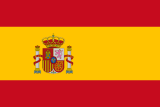
Spain – Facts, Capital & Geography | Random Country Generator
Capital
Madrid
Population
47.4 Million (#30)
Currency
Euro (EUR)
Language
Spanish
Area
505,990 km²
National Dish
Paella
National Flower
Red Carnation
Density
94/km²
Internet TLD
.es
Brief History
Spain was inhabited by Celtic and Iberian tribes before Roman conquest, later ruled by the Visigoths and Moorish Islamic caliphates from 711 CE. The Christian Reconquista culminated in 1492 with the fall of Granada and the unification of Spain under Isabella I and Ferdinand II. Spain built a massive global empire during the Golden Age. Following the Spanish Civil War, Francisco Franco ruled as a dictator (1939–1975) before democracy was restored.
Key Demographics & Capital
Spain has a population of approximately 47.4 million, with Spanish (Castilian) serving as the official national language, alongside co-official languages like Catalan, Galician, and Basque. The population is highly urbanized (81%), clustered in coastal cities and the capital Madrid. The country has seen increasing immigrant diversity in recent decades, with significant Romanian, Moroccan, and Latin American communities.
Geography
Spain occupies most of the Iberian Peninsula in southwestern Europe. The interior is dominated by the Meseta Central plateau, surrounded by mountain ranges including the Pyrenees, Sierra Nevada, and Cantabrian Mountains. Spain has both Mediterranean and Atlantic coastlines, plus the Canary and Balearic Islands. The climate ranges from oceanic in the north to semi-arid in the southeast.
Culture & Tradition
Spanish culture is vibrant and passionate. Flamenco dance and music, bullfighting (controversial but traditional), and fiestas define the cultural landscape. Spanish cuisine — tapas, paella, jamón ibérico — is world-famous. Artists like Picasso, Dalí, and Gaudí revolutionized art and architecture. Football (Real Madrid, Barcelona) is practically a religion.
Economy
Spain has the fourth-largest economy in the eurozone. Tourism is the biggest economic driver, with over 80 million visitors annually. Other key sectors include automotive, renewable energy, agriculture (olive oil, wine, citrus), and fashion (Zara/Inditex). Spain is the world's largest olive oil producer.
Travel Highlights
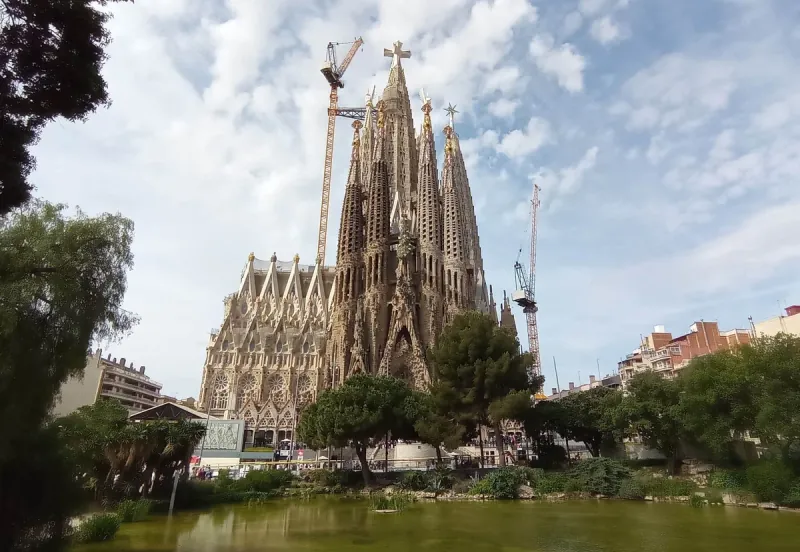
Explore Barcelona's Gaudí architecture (Sagrada Familia), visit Madrid's Prado Museum, walk the Camino de Santiago pilgrimage route, relax on Costa del Sol beaches, and discover the Alhambra in Granada. Seville's flamenco shows, San Sebastián's world-class cuisine, and Ibiza's nightlife offer diverse experiences.
Fun Facts
Spain has the second-highest number of bars per capita in the world.
La Tomatina festival involves throwing over 100 tons of tomatoes.
Spanish is the second most spoken native language in the world.
Spain was the first country to build a high-speed rail network in Europe.
Siestas (afternoon naps) are a cherished tradition.
Flamenco dancing originated in Andalusia.
Map
Bordering & Nearby Countries
Frequently Asked Questions (FAQs)
More from Europe
Want a surprise? Try our random Europe country generator or pick from the entire world.
Albania
Explore Albania: Europe's last hidden gem. Discover pristine beaches, ancient cities, and dramatic Albanian Alps.
Andorra
Explore Andorra: tiny mountain principality in the Pyrenees. Discover skiing, duty-free shopping, and Romanesque heritage.
Austria
Explore Austria: land of Mozart, Alpine peaks, and Viennese culture. Discover Salzburg, ski resorts, and Habsburg heritage.
Belarus
Explore Belarus: Europe's last primeval forest and medieval castles. Discover Belovezhskaya Pushcha, Mir Castle, and Slavic heritage.