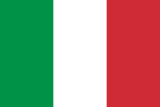
Italy – Facts, Capital & Geography | Random Country Generator
Capital
Rome
Population
59.0 Million (#25)
Currency
Euro (EUR)
Language
Italian
Area
301,340 km²
National Dish
Ragù alla Bolognese
National Flower
Lily
Density
201/km²
Internet TLD
.it
Brief History
Italy was the center of the Roman Empire, which dominated the Mediterranean basin for centuries, later becoming the cradle of the Renaissance in the 14th century. The peninsula remained divided into rival city-states and kingdoms until the Risorgimento movement unified Italy in 1861 under Victor Emmanuel II. Benito Mussolini's fascist dictatorship (1922–1943) led the nation into WWII, after which it became a republic in 1946.
Key Demographics & Capital
Italy has a population of approximately 59 million, characterized by a low birth rate and an aging demographic, with over 23% of the population aged 65 or older. Italian is the sole official language, while regional dialects coexist. The country has seen increasing immigrant diversity in recent decades, with significant communities of Romanian, Albanian, Moroccan, and Chinese nationals.
Geography
Italy is a boot-shaped peninsula extending into the Mediterranean Sea, with the Alps forming its northern border. The Apennine Mountains run the length of the peninsula. Italy includes the islands of Sicily and Sardinia. The country has active volcanoes including Mount Vesuvius, Mount Etna, and Stromboli. Coastlines, lakes, and rolling hills define the landscape.
Culture & Tradition
Italy is the cradle of Western civilization, the Roman Empire, and the Renaissance. Italian contributions to art (Leonardo, Michelangelo), music (opera), literature (Dante), and architecture are unparalleled. Italian cuisine — pasta, pizza, gelato — is beloved worldwide. Fashion houses like Gucci, Prada, and Armani call Italy home. Family, food, and festivity are central to Italian life.
Economy
Italy has the eighth-largest economy in the world. Key sectors include luxury fashion, automotive (Ferrari, Lamborghini, Fiat), machinery, food and wine, and tourism. Northern Italy is the industrial heartland, while tourism drives economies in cities like Rome, Venice, and Florence. Italy is the world's largest wine producer.
Travel Highlights
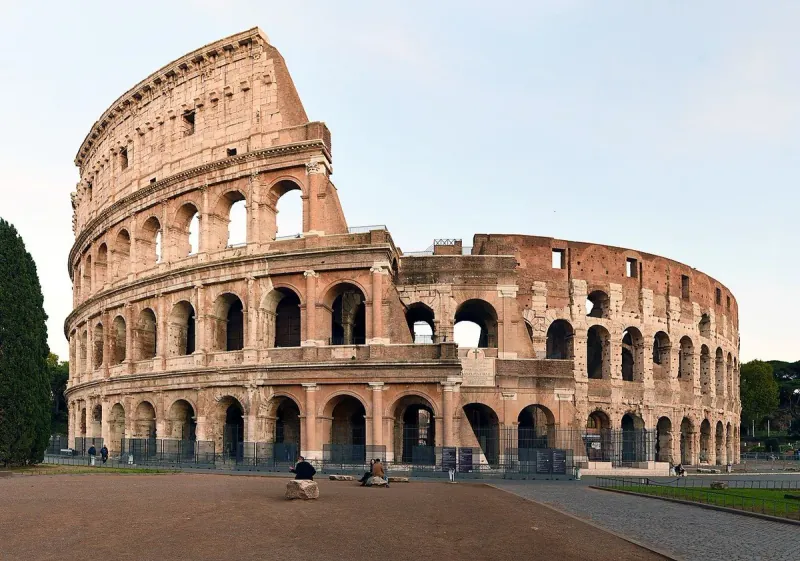
Rome's Colosseum and Vatican, Florence's Uffizi Gallery, Venice's canals, the Amalfi Coast's dramatic cliffs, and Tuscany's rolling vineyards are must-sees. Visit Pompeii's ancient ruins, the Cinque Terre's colorful villages, and Lake Como's glamorous shores. Sicily offers incredible food, history, and Mount Etna.
Fun Facts
Italy has more UNESCO World Heritage Sites than any other country.
Pizza Margherita was named after an Italian queen.
The average Italian eats about 25 kg of pasta per year.
The Colosseum could hold between 50,000 and 80,000 spectators.
Italy is home to the world's smallest country, Vatican City.
Italian is the closest living language to Latin.
Map
Bordering & Nearby Countries
Frequently Asked Questions (FAQs)
More from Europe
Want a surprise? Try our random Europe country generator or pick from the entire world.
Albania
Explore Albania: Europe's last hidden gem. Discover pristine beaches, ancient cities, and dramatic Albanian Alps.
Andorra
Explore Andorra: tiny mountain principality in the Pyrenees. Discover skiing, duty-free shopping, and Romanesque heritage.
Austria
Explore Austria: land of Mozart, Alpine peaks, and Viennese culture. Discover Salzburg, ski resorts, and Habsburg heritage.
Belarus
Explore Belarus: Europe's last primeval forest and medieval castles. Discover Belovezhskaya Pushcha, Mir Castle, and Slavic heritage.