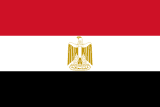
Egypt – Facts, Capital & Geography | Random Country Generator
Capital
Cairo
Population
104.0 Million (#14)
Currency
Egyptian Pound (EGP)
Language
Arabic
Area
1,002,450 km²
National Dish
Koshari
National Flower
Egyptian Lotus
Density
103/km²
Internet TLD
.eg
Brief History
Egypt is home to one of the world's oldest continuous civilizations, developing along the Nile Valley under dynastic pharaohs beginning around 3100 BCE. Following conquests by Persian, Macedonian (Alexander the Great), Roman, Byzantine, Islamic, and Ottoman empires, it became a British protectorate in 1914. Egypt declared independence in 1922 and transitioned to a republic on June 18, 1953, under Gamal Abdel Nasser, who nationalized the Suez Canal in 1956.
Key Demographics & Capital
Egypt has a population of approximately 112 million, making it the most populous nation in the Arab world. The population is extremely clustered, with 95% of the population living within a narrow strip along the Nile River and Delta, which accounts for only 4% of the country's land area. Arabic is the official language, and Egyptian Arabic is the primary spoken dialect. The population has a high youth ratio (median age of 24) and faces high rates of urbanization.
Geography
Egypt sits at the crossroads of Africa and Asia, bordered by the Mediterranean and Red Seas. The Nile River, the world's longest, flows through the country creating a fertile valley amidst vast desert. About 95% of Egypt's population lives along the Nile. The Sinai Peninsula connects Egypt to Asia, featuring rugged mountains and coral reefs.
Culture & Tradition
Egypt boasts one of the world's oldest civilizations, spanning over 5,000 years. Ancient Egyptian achievements in architecture (pyramids, temples), writing (hieroglyphics), and science continue to fascinate. Modern Egyptian culture blends Arab, Islamic, and ancient traditions. Egyptian cuisine features dishes like koshari, ful medames, and ta'ameya. Music and belly dancing are integral to celebrations.
Economy
Egypt's economy is the second-largest in Africa. Key sectors include tourism, agriculture (cotton, rice, citrus), the Suez Canal (earning transit fees), oil and gas, and remittances from Egyptians abroad. Manufacturing and construction are growing sectors. The government is investing in new administrative capital city east of Cairo.
Travel Highlights
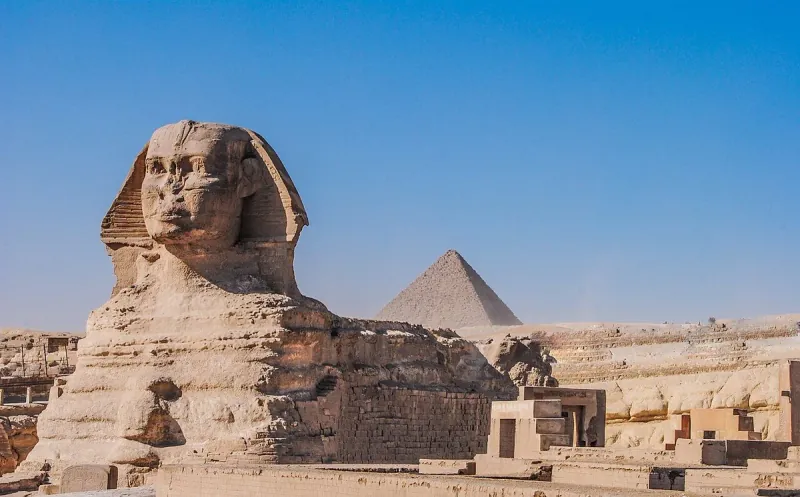
Explore the Pyramids of Giza and the Sphinx, cruise the Nile River, visit the Valley of the Kings in Luxor, and dive in the Red Sea at Sharm el-Sheikh. The Egyptian Museum in Cairo houses priceless artifacts including Tutankhamun's treasures. Aswan's Philae Temple and Abu Simbel are architectural marvels.
Fun Facts
The Great Pyramid of Giza is the only surviving ancient wonder of the world.
Ancient Egyptians invented toothpaste.
Cleopatra lived closer in time to the Moon landing than to the construction of the Great Pyramid.
Egypt's Suez Canal is one of the most important waterways in the world.
Cats were sacred animals in ancient Egypt.
The ancient Egyptian calendar had 365 days.
Map
Bordering & Nearby Countries
Frequently Asked Questions (FAQs)
More from Africa
Want a surprise? Try our random Africa country generator or pick from the entire world.
Algeria
Discover Algeria: Africa's largest country. From Saharan landscapes to Mediterranean coasts, explore ancient ruins and Berber culture.
Angola
Explore Angola: from Kalandula Falls to Atlantic beaches. Discover vibrant culture, wildlife, and Southern African landscapes.
Benin
Discover Benin: birthplace of Voodoo. Explore Dahomey palaces, floating villages, and rich West African traditions.
Botswana
Explore Botswana: home of the Okavango Delta and incredible safaris. Discover elephants, Kalahari landscapes, and African wilderness.