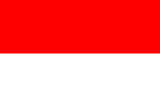
Indonesia – Facts, Capital & Geography | Random Country Generator
Capital
Jakarta
Population
275.5 Million (#4)
Currency
Indonesian Rupiah (IDR)
Language
Indonesian
Area
1,904,569 km²
National Dish
Nasi Goreng
National Flower
Moon Orchid
Density
151/km²
Internet TLD
.id
Brief History
Indonesia's maritime archipelago was ruled by powerful Buddhist and Hindu empires like Srivijaya and Majapahit before adopting Islam in the 13th century. Dutch colonizers established the Dutch East Indies in the 17th century, maintaining control until WWII Japanese occupation. Sukarno declared independence on August 17, 1945, leading to a four-year war with the Netherlands. Following Suharto's authoritarian regime (1967–1998), Indonesia transitioned to democracy.
Key Demographics & Capital
Indonesia has a population of approximately 277 million, making it the fourth most populous nation in the world. It comprises over 300 ethnic groups, with the Javanese (40%) and Sundanese (15%) being the largest. Indonesian (Bahasa Indonesia) is the sole official language. The population is highly concentrated on the island of Java (over 56% of the total population), which is extremely dense.
Geography
Indonesia is the world's largest archipelago, stretching across the equator between the Indian and Pacific Oceans. The islands include Sumatra, Java, Borneo (Kalimantan), Sulawesi, and Papua. Volcanic mountains, tropical rainforests, and coral reefs define the landscape. Indonesia sits on the Ring of Fire with over 130 active volcanoes. Java is the most densely populated island.
Culture & Tradition
Indonesian culture is incredibly diverse, with over 300 ethnic groups. Javanese and Balinese cultures include intricate batik textiles, gamelan music, wayang puppet theater, and elaborate temple ceremonies. Indonesian cuisine varies by region — nasi goreng, rendang, and satay are staples. Bali's Hindu traditions coexist with Indonesia's Muslim majority. Traditional dance forms are elaborate and mesmerizing.
Economy
Indonesia has Southeast Asia's largest economy. Key sectors include palm oil (world's largest producer), mining (coal, nickel, tin), manufacturing, and tourism. Indonesia is a member of the G20. The digital economy is booming with tech unicorns like GoTo and Tokopedia. Jakarta is the economic center, though the capital is planned to move to Nusantara in Borneo.
Travel Highlights
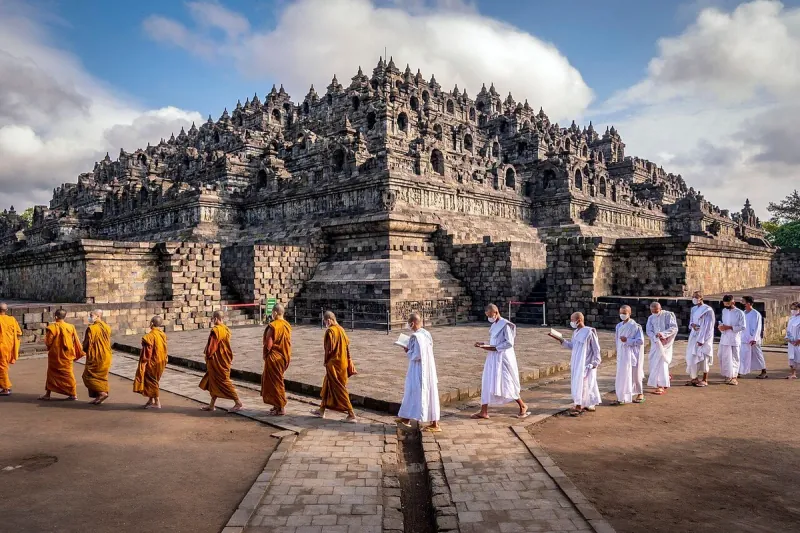
Experience Bali's temples and rice terraces, explore Komodo National Park, dive in Raja Ampat (the world's most biodiverse marine area), visit the ancient Borobudur temple in Java, and trek to Mount Bromo's volcanic crater. Yogyakarta offers rich Javanese culture. The orangutans of Borneo and surfing in Mentawai Islands are unforgettable.
Fun Facts
Indonesia has over 17,000 islands, making it the world's largest archipelago.
Komodo dragons are found only in Indonesia.
Indonesia is the world's fourth most populous country.
Bali is known as the 'Island of the Gods'.
Indonesia spans three time zones.
The country has over 700 languages.
Map
Bordering & Nearby Countries
Frequently Asked Questions (FAQs)
More from Asia
Want a surprise? Try our random Asia country generator or pick from the entire world.
Afghanistan
Discover Afghanistan: Hindu Kush mountains and ancient Silk Road heritage. Explore Bamiyan Valley, Herat's architecture, and Afghan culture.
Armenia
Explore Armenia: first Christian nation. Discover ancient monasteries, Lake Sevan, and Caucasus mountain heritage.
Azerbaijan
Explore Azerbaijan: Land of Fire. Discover Baku's Flame Towers, ancient walled city, mud volcanoes, and Caspian Sea heritage.

Bahrain
Explore Bahrain: ancient Dilmun heritage and modern Gulf culture. Discover pearl diving history, Formula One, and island archipelago charm.