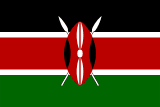
Kenya – Facts, Capital & Geography | Random Country Generator
Capital
Nairobi
Population
54.0 Million (#27)
Currency
Kenyan Shilling (KES)
Language
Swahili, English
Area
580,367 km²
National Dish
Nyama Choma
National Flower
African Violet
Density
94/km²
Internet TLD
.ke
Brief History
Kenya's interior was inhabited by Bantu, Nilotic, and Cushitic groups while its coast hosted Arab and Swahili trading cities before British colonization in the late 19th century. The struggle for independence was marked by the Mau Mau uprising in the 1950s. Kenya achieved independence on December 12, 1963, under Jomo Kenyatta, developing into the economic and technological hub of East Africa.
Key Demographics & Capital
Kenya has a population of approximately 54 million, comprising over 40 distinct ethnic groups, with the Kikuyu (17%), Luhya (14%), Luo (11%), and Kamba (10%) being the largest. Both English and Swahili are official languages, with Swahili serving as the primary commercial lingua franca. The population is very young (median age of 20) and predominantly rural (72%).
Geography
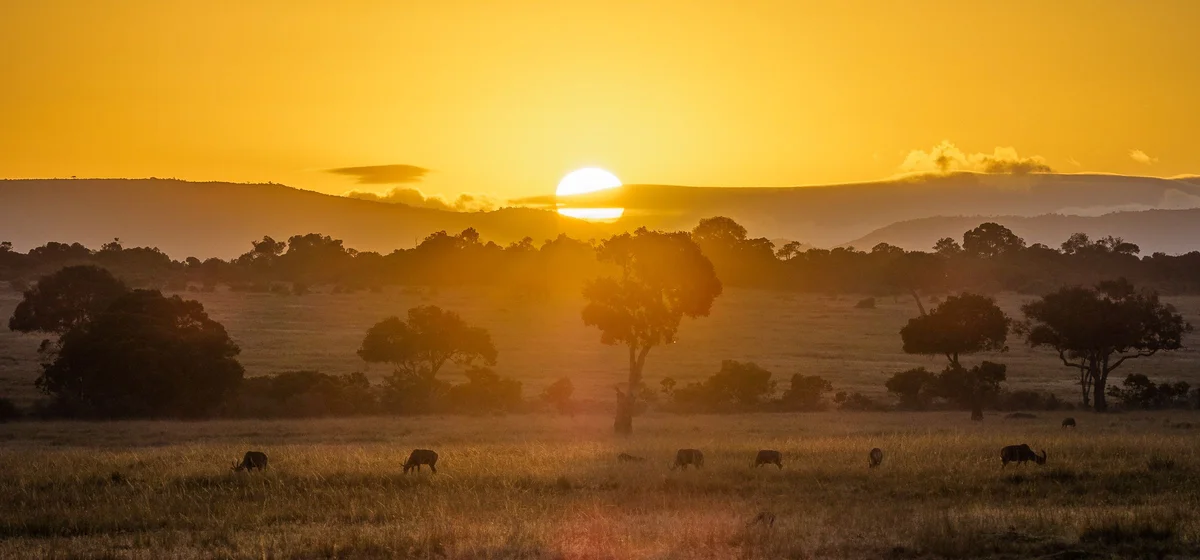
Kenya lies on the equator in East Africa, with the Indian Ocean coastline to the southeast. The Great Rift Valley runs through the country, creating dramatic landscapes including lakes, escarpments, and volcanic mountains. Mount Kenya rises to 5,199 meters. Ecosystems range from savanna and desert to tropical forests and alpine zones.
Culture & Tradition
Kenya is home to over 40 ethnic groups, each with distinct traditions. The Maasai and Kikuyu are among the most well-known. Swahili and English are official languages. Kenyan music blends traditional rhythms with modern genres. Athletics, particularly long-distance running, is a source of enormous national pride. Wildlife conservation is a key cultural value.
Economy
Kenya has East Africa's largest economy. Key sectors include agriculture (tea, coffee, flowers), tourism (safari industry), technology (Nairobi is nicknamed 'Silicon Savannah'), and financial services. M-Pesa, the mobile money platform, revolutionized banking in Kenya and globally. Horticulture and remittances are also significant contributors.
Travel Highlights
Go on safari in the Masai Mara to witness the Great Migration, climb Mount Kenya, relax on Diani Beach, explore Nairobi's vibrant food scene and national park, and visit Lake Nakuru for flamingo viewing. Lamu Island offers Swahili culture and architecture. The Samburu Reserve provides a unique, less-crowded safari experience.
Fun Facts
Kenya is named after Mount Kenya, the second-highest peak in Africa.
The Great Wildebeest Migration passes through Kenya's Masai Mara.
Kenya is one of the top producers of tea and coffee.
Kenyan runners dominate long-distance running worldwide.
Kenya straddles the equator.
The Maasai people are one of the most well-known tribes in Africa.
Map
Bordering & Nearby Countries
Frequently Asked Questions (FAQs)
More from Africa
Want a surprise? Try our random Africa country generator or pick from the entire world.
Algeria
Discover Algeria: Africa's largest country. From Saharan landscapes to Mediterranean coasts, explore ancient ruins and Berber culture.
Angola
Explore Angola: from Kalandula Falls to Atlantic beaches. Discover vibrant culture, wildlife, and Southern African landscapes.
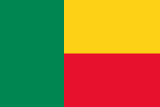
Benin
Discover Benin: birthplace of Voodoo. Explore Dahomey palaces, floating villages, and rich West African traditions.
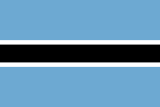
Botswana
Explore Botswana: home of the Okavango Delta and incredible safaris. Discover elephants, Kalahari landscapes, and African wilderness.