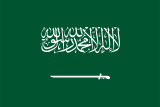
Saudi Arabia – Facts, Capital & Geography | Random Country Generator
Capital
Riyadh
Population
36.0 Million (#41)
Currency
Saudi Riyal (SAR)
Language
Arabic
Area
2,149,690 km²
National Dish
Kabsa
National Flower
None official
Density
16/km²
Internet TLD
.sa
Brief History
Saudi Arabia was home to ancient trade routes and the birth of Islam in the 7th century CE under the Prophet Muhammad. The modern state, the Kingdom of Saudi Arabia, was founded in 1932 by King Abdulaziz Al Saud (Ibn Saud) through a series of conquests unifying the Nejd and Hejaz regions. The discovery of oil in 1938 at Dammam transformed the kingdom into a global energy superpower.
Key Demographics & Capital
Saudi Arabia has a population of approximately 32 million, with foreign nationals (primarily migrant workers from South Asia, Egypt, and Syria) comprising over 38% of the total population. Arabic is the sole official language. The population has a high youth ratio (median age of 29) and is highly urbanized (over 84%), concentrated in major metropolitan hubs like Riyadh, Jeddah, Mecca, and Medina.
Geography
Saudi Arabia occupies most of the Arabian Peninsula. The landscape is predominantly desert, including the vast Rub' al Khali (Empty Quarter) — the world's largest sand desert. The Hejaz Mountains run along the Red Sea coast. The country has Red Sea coastline with coral reefs and the Persian Gulf coast in the east. There are no permanent rivers.
Culture & Tradition
Saudi culture is deeply rooted in Islam and Arab traditions. Mecca and Medina attract millions of Muslim pilgrims annually for Hajj and Umrah. Traditional arts include calligraphy, poetry, and sword dancing (ardha). Saudi cuisine features kabsa (spiced rice and meat), dates, and Arabic coffee. The country is undergoing rapid cultural transformation through Vision 2030.
Economy
Saudi Arabia has the world's second-largest proven oil reserves and is the world's largest oil exporter. The economy is dominated by the petroleum sector. Vision 2030 aims to diversify into tourism, entertainment, technology, and renewable energy. NEOM and The Line are futuristic megaprojects. The Saudi stock market is the largest in the Middle East.
Travel Highlights
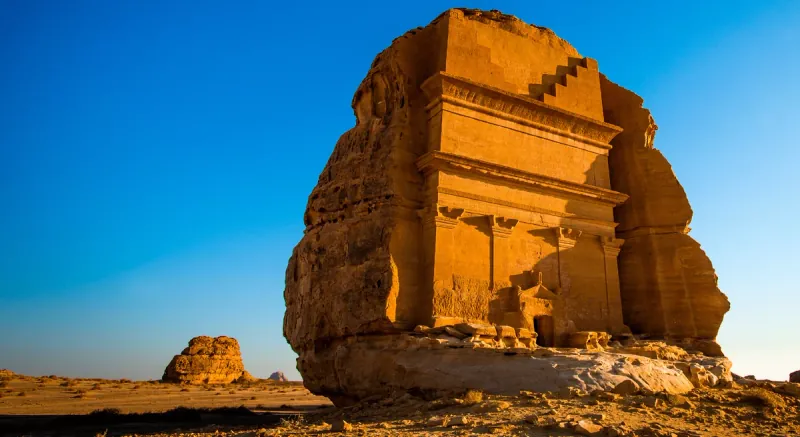
Discover the ancient Nabataean tombs of AlUla (UNESCO), explore the old town of Jeddah (UNESCO), visit the Edge of the World escarpment near Riyadh, dive in the Red Sea, experience the modernizing Riyadh, and explore the Asir Mountains. Saudi Arabia is rapidly opening to international tourism with extraordinary archaeological and natural sites.
Fun Facts
Saudi Arabia has the world's largest sand desert (Rub' al Khali/Empty Quarter).
Mecca and Medina are Islam's two holiest cities.
Saudi Arabia opened to tourism only in 2019.
The country has no rivers or permanent bodies of water.
Saudi Arabia is the world's largest oil exporter.
AlUla has rock-cut tombs rivaling Petra in Jordan.
Map
Bordering & Nearby Countries
Frequently Asked Questions (FAQs)
More from Asia
Want a surprise? Try our random Asia country generator or pick from the entire world.
Afghanistan
Discover Afghanistan: Hindu Kush mountains and ancient Silk Road heritage. Explore Bamiyan Valley, Herat's architecture, and Afghan culture.
Armenia
Explore Armenia: first Christian nation. Discover ancient monasteries, Lake Sevan, and Caucasus mountain heritage.
Azerbaijan
Explore Azerbaijan: Land of Fire. Discover Baku's Flame Towers, ancient walled city, mud volcanoes, and Caspian Sea heritage.
Bahrain
Explore Bahrain: ancient Dilmun heritage and modern Gulf culture. Discover pearl diving history, Formula One, and island archipelago charm.