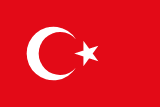
Turkey – Facts, Capital & Geography | Random Country Generator
Capital
Ankara
Population
85.3 Million (#18)
Currency
Turkish Lira (TRY)
Language
Turkish
Area
783,356 km²
National Dish
Kebab
National Flower
Tulip
Density
108/km²
Internet TLD
.tr
Brief History
Turkey's Anatolian peninsula was home to ancient empires like the Hittites, Greeks, Romans, and Byzantines, before the Seljuk Turks initiated Turkification in the 11th century. The Ottoman Empire, founded around 1299, expanded to control Southeast Europe, Western Asia, and North Africa. Following the Ottoman defeat in WWI, Mustafa Kemal Atatürk led a national war of independence, abolishing the caliphate and founding the modern Republic of Turkey as a secular state in 1923. Turkey has since developed a dynamic economy and strategic geopolitical role connecting Europe and Asia.
Key Demographics & Capital
Turkey has a population of approximately 85.3 million, with ethnic Turks comprising around 70% to 75% of the population, and Kurds forming the largest ethnic minority at 19%. Turkish is the sole official language, written in the Latin alphabet since 1928, while Kurdish is spoken in the eastern and southeastern provinces. The population is highly urbanized, with over 76% residing in cities, and massive concentrations around Istanbul and Ankara. In recent years, Turkey has become the world's largest refugee-hosting nation, harboring millions of displaced Syrians.
Geography
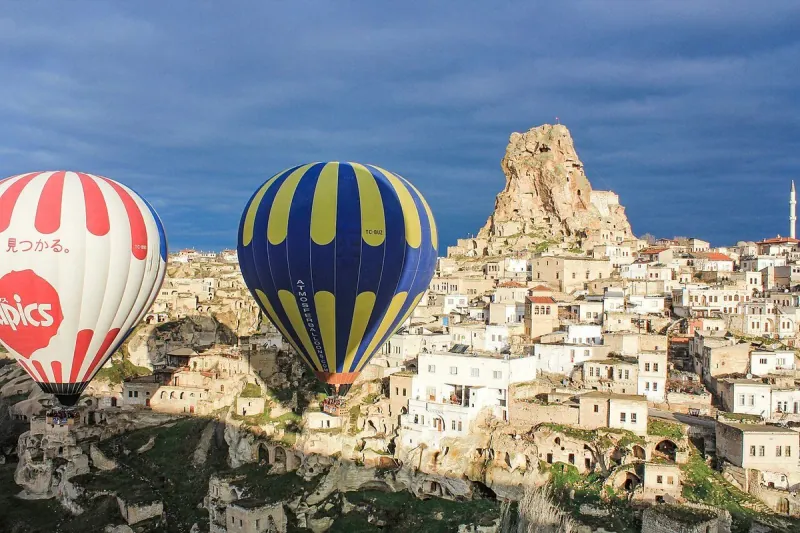
Turkey bridges Europe and Asia, surrounded by the Mediterranean, Black, and Aegean Seas. The landscape includes the Anatolian plateau, Taurus Mountains, fertile coastal plains, and the unique fairy chimneys of Cappadocia. The Bosphorus strait in Istanbul divides the European and Asian continents. Eastern Turkey features Mount Ararat, the country's highest peak.
Culture & Tradition
Turkish culture blends Central Asian, Middle Eastern, and European influences. The Ottoman Empire's legacy is visible in magnificent mosques, palaces, and cuisine. Turkish food — kebabs, baklava, Turkish delight, Turkish coffee — is world-renowned. Traditional arts include carpet weaving, ceramics, and calligraphy. Turkish hospitality (misafirperverlik) is legendary.
Economy
Turkey has the 19th-largest economy globally. Key sectors include automotive, textiles, electronics, tourism, agriculture, and construction. Istanbul is the economic hub and one of the world's fastest-growing cities. Tourism is a major revenue source, with over 50 million visitors annually. Turkey is a significant regional economic power.
Travel Highlights
Explore Istanbul's Hagia Sophia and Grand Bazaar, float over Cappadocia in a hot air balloon, visit the ancient ruins of Ephesus, relax on the Turquoise Coast, and bathe in Pamukkale's thermal pools. The ancient city of Troy, the Mediterranean resort of Antalya, and the underground cities of Cappadocia are unforgettable experiences.
Fun Facts
Turkey spans two continents — Europe and Asia.
Istanbul was formerly known as Constantinople and Byzantium.
Turkey introduced coffee to Europe.
Tulips originated in Turkey, not Holland.
The ancient city of Troy is located in Turkey.
Turkish baths (hamams) have been a tradition for centuries.
Map
Bordering & Nearby Countries
Frequently Asked Questions (FAQs)
More from Asia
Want a surprise? Try our random Asia country generator or pick from the entire world.
Afghanistan
Discover Afghanistan: Hindu Kush mountains and ancient Silk Road heritage. Explore Bamiyan Valley, Herat's architecture, and Afghan culture.
Armenia
Explore Armenia: first Christian nation. Discover ancient monasteries, Lake Sevan, and Caucasus mountain heritage.
Azerbaijan
Explore Azerbaijan: Land of Fire. Discover Baku's Flame Towers, ancient walled city, mud volcanoes, and Caspian Sea heritage.

Bahrain
Explore Bahrain: ancient Dilmun heritage and modern Gulf culture. Discover pearl diving history, Formula One, and island archipelago charm.